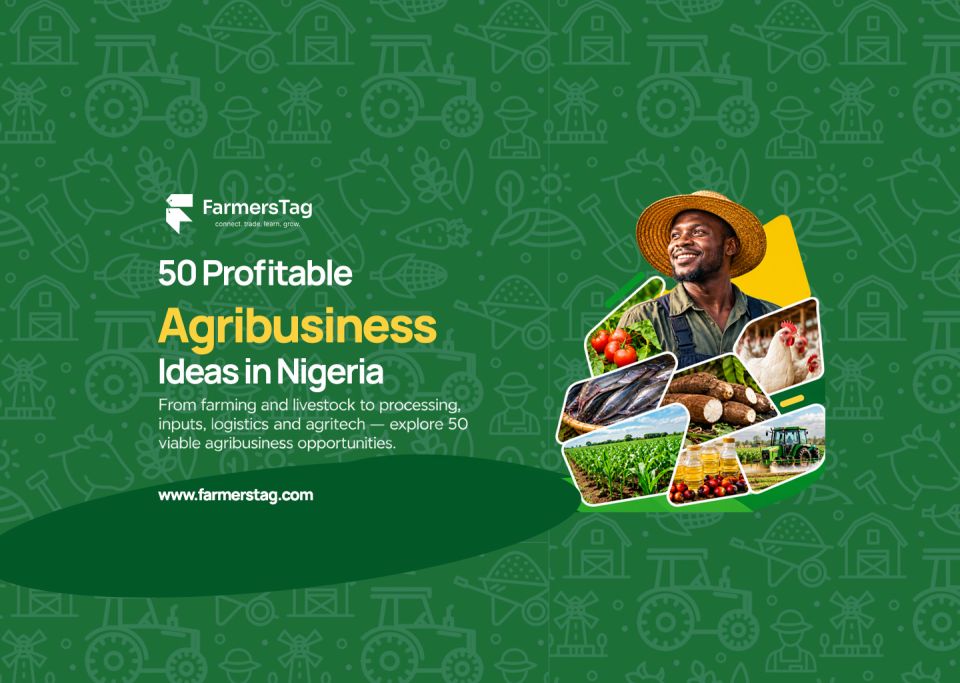
Nigeria's agricultural sector is much bigger than farming alone.
There are opportunities in crop production, livestock, fisheries, food processing, agricultural inputs, transportation, storage, farm services, agricultural technology, marketing and agricultural education.
FAO estimates that agriculture contributed about 28% of Nigeria's GDP between 2021 and 2024 and supported roughly 40% of the country's labour force. At the same time, the sector continues to face challenges including high production costs, limited financing, inadequate infrastructure, post-harvest losses and poor market access. FAOHome
For entrepreneurs, this means the opportunity isn't only in producing food. There are also businesses that solve the problems surrounding production and distribution.
Here are 50 agribusiness ideas worth considering in Nigeria.
1. Poultry Farming
Poultry farming is one of the most established agribusiness opportunities in Nigeria.
You can focus on:
- Broiler production
- Egg production
- Point-of-lay birds
- Day-old chick distribution
- Breeding
The business can be started at different scales, but feed costs, mortality, disease management and access to reliable buyers need to be considered carefully.
Best suited for: Entrepreneurs interested in livestock production.
2. Catfish Farming
Catfish farming is another popular aquaculture business in Nigeria.
A farmer can produce catfish for:
- Restaurants
- Hotels
- Market traders
- Fish processors
- Households
- Fish smokers
The major considerations include fingerling quality, feed costs, water quality, mortality and finding buyers before harvest.
3. Tilapia Farming
Tilapia farming can be operated independently or alongside other aquaculture businesses.
Tilapia can be sold fresh or processed, giving entrepreneurs opportunities to target different markets.
The choice between catfish and tilapia should depend on local demand, production conditions and access to buyers.
4. Cassava Farming
Cassava is one of Nigeria's major agricultural value chains and has both food and industrial applications.
Possible markets include:
- Garri processors
- Starch producers
- Flour processors
- Ethanol producers
- Animal-feed businesses
- Local food markets
Nigeria's agricultural investment programmes have identified cassava as a major value chain with opportunities in production, processing and market development. FAOHome
5. Maize Farming
Maize is used extensively for human consumption and animal feed.
Instead of thinking only about growing maize, an entrepreneur can build a business around the wider maize value chain:
Seed → production → aggregation → drying → storage → processing → distribution
This can create opportunities beyond the farm itself.
6. Rice Farming
Rice production has opportunities at both the production and processing levels.
Possible businesses include:
- Rice farming
- Paddy aggregation
- Rice milling
- Rice packaging
- Rice distribution
- By-product utilization
7. Vegetable Farming
Vegetable farming can provide relatively frequent harvest cycles compared with some tree crops.
Possible crops include:
- Tomato
- Pepper
- Cucumber
- Okra
- Amaranth
- Lettuce
- Spinach
- Watermelon
The most important factor isn't simply choosing a crop. Market demand should influence what you plant.
8. Tomato Farming
Tomatoes have strong demand from households, restaurants and food processors.
However, tomato farming also comes with significant production and post-harvest challenges.
That creates opportunities in areas such as:
- Irrigation
- Storage
- Transportation
- Processing
- Tomato paste production
- Drying
9. Pepper Farming
Pepper can be sold fresh or processed into dried products, powders and other food products.
An entrepreneur can therefore target both fresh-produce and processed-food markets.
10. Potato Farming
Irish potato production can be commercially attractive in suitable growing areas.
Beyond production, opportunities exist in:
- Potato aggregation
- Cold storage
- Processing
- Packaging
- Distribution
11. Yam Farming
Yam remains an important food crop in Nigeria.
Entrepreneurs can participate in:
- Yam production
- Aggregation
- Wholesale trading
- Storage
- Processing
- Export-oriented supply
12. Soybean Farming
Soybean is important in animal feed, food processing and industrial applications.
BOI's smallholder farmer cluster programme specifically includes soybean among the short-cycle crops supported through its agricultural value-chain financing approach. Bank of Industry
13. Snail Farming
Snail farming attracts entrepreneurs because it can be operated on relatively small land compared with many conventional livestock businesses.
Revenue can come from:
- Live snails
- Processed snails
- Breeding stock
- Snail eggs
- Supplying restaurants and food businesses
However, entrepreneurs should validate their local market before investing heavily.
14. Goat Farming
Goat production can target:
- Meat
- Breeding stock
- Traders
- Restaurants
- Religious and cultural celebrations
A farmer can specialize in meat production, breeding or a combination of both.
15. Sheep Farming
Sheep farming provides another livestock opportunity.
Businesses can focus on:
- Breeding
- Fattening
- Meat production
- Trading
Fattening can be particularly attractive when the entrepreneur has a reliable market and understands seasonal demand.
16. Pig Farming
Pig farming can generate revenue from:
- Pork production
- Breeding
- Piglets
- Fattening
Before entering the business, entrepreneurs should consider local market acceptance, feed costs, disease control and access to suitable processing or sales channels.
17. Cattle Fattening
Instead of operating a large cattle ranch, an entrepreneur can specialize in buying cattle, improving their condition and selling them at a higher market value.
The economics depend heavily on:
- Purchase price
- Feed
- Veterinary care
- Holding period
- Transportation
- Selling price
18. Fish Smoking and Processing
Fish processing is an opportunity to add value to fish rather than selling everything fresh.
A business can specialize in:
- Smoked catfish
- Smoked tilapia
- Packaged fish
- Vacuum-packed fish
- Wholesale supply
This also helps address some of the post-harvest challenges affecting agricultural value chains.
19. Meat Processing
Meat can be processed into products such as:
- Sausages
- Burgers
- Minced meat
- Packaged cuts
- Ready-to-cook products
This requires more attention to food safety, cold-chain infrastructure and regulatory requirements.
20. Garri Processing
Cassava processing is one of the clearest examples of how an entrepreneur can make money beyond primary production.
Possible products include:
- Garri
- Cassava flour
- Starch
- High-quality cassava flour
- Animal-feed products
21. Palm Oil Processing
Palm oil businesses can participate in:
- Fresh fruit bunch aggregation
- Palm oil processing
- Palm kernel processing
- Palm kernel oil
- Palm kernel cake
The opportunity becomes more interesting when the business utilizes multiple parts of the palm fruit rather than relying on one product.
22. Cocoa Processing
Cocoa presents opportunities beyond selling raw beans.
Possible businesses include:
- Cocoa aggregation
- Bean processing
- Cocoa powder
- Cocoa butter
- Chocolate
- Cocoa-based food products
Nigeria's cocoa value chain is currently receiving significant attention around value addition. BOI reported that it disbursed more than ₦164 billion in 2025 to over 3,500 agro and food-processing businesses and highlighted cocoa processing as an important value-addition opportunity. Bank of Industry
23. Cashew Processing
Cashew is another value chain with opportunities in:
- Production
- Aggregation
- Processing
- Packaging
- Export
FAO currently identifies cashew as one of Nigeria's priority agricultural value chains and is supporting work on a national cashew strategy. FAOHome
24. Honey Production and Beekeeping
Beekeeping can generate revenue from:
- Honey
- Beeswax
- Propolis
- Other hive products
It can also complement crop production through pollination.
25. Animal Feed Production
Feed is one of the most important inputs in commercial livestock production.
An entrepreneur can produce:
- Poultry feed
- Fish feed
- Pig feed
- Goat feed
- Cattle feed
This business can operate at small, medium or industrial scale depending on equipment and distribution.
26. Agricultural Input Retail
Farmers need inputs every production cycle.
An agricultural input store can sell:
- Seeds
- Fertilizer
- Crop protection products
- Animal health products
- Farm tools
- Irrigation equipment
- Feed
The business works best when it is built around the needs of a specific farming community.
27. Seed Production and Distribution
Quality planting material is fundamental to agricultural productivity.
Business opportunities include:
- Seed multiplication
- Seed distribution
- Nursery operations
- Improved planting materials
This area requires compliance with applicable agricultural and seed regulations.
28. Farm Equipment Rental
Many smallholder farmers cannot justify purchasing expensive equipment.
That creates opportunities for equipment rental businesses.
Examples include:
- Tractors
- Planters
- Harvesters
- Sprayers
- Tillers
- Irrigation equipment
The business can operate by charging farmers per acre, per day or per job.
29. Tractor and Farm Machinery Services
Rather than simply renting machines, an entrepreneur can provide complete mechanization services.
For example:
"We prepare your one-hectare maize farm."
The service could include:
1. Land clearing
2. Ploughing
3. Harrowing
4. Planting
5. Spraying
This shifts the business from equipment rental into agricultural services.
30. Irrigation Services
Water availability is one of the major constraints facing agricultural production.
Businesses can design and install:
- Drip irrigation
- Sprinkler systems
- Solar-powered irrigation
- Water pumps
- Farm water storage
This is particularly useful for commercial farms and dry-season production.
31. Cold Storage Business
Cold storage can help preserve:
- Vegetables
- Fruits
- Meat
- Fish
- Dairy products
The opportunity isn't necessarily to build a huge cold-storage facility immediately.
A smaller facility serving farmers, traders, restaurants and food businesses can be a viable starting point depending on location and utilization.
32. Agricultural Warehousing
Farmers and traders often need somewhere to store produce between harvest and sale.
A warehouse business can specialize in commodities such as:
- Maize
- Rice
- Soybeans
- Beans
- Groundnuts
Proper storage management is critical because poor storage can result in significant losses.
33. Farm Produce Aggregation
This is one of the business models I think deserves more attention.
Instead of farming yourself, you can organize supply from many farmers.
For example:
100 farmers × 1 tonne of maize = 100 tonnes of aggregated maize.
You then sell to:
- Feed mills
- Processors
- Food manufacturers
- Wholesalers
- Exporters
BOI's smallholder cluster financing model specifically recognizes aggregators, processors and manufacturers as important participants in agricultural value chains. Bank of Industry
34. Farm Produce Trading
An entrepreneur can buy agricultural products where they are abundant and sell them where demand and prices are better.
Products can include:
- Maize
- Rice
- Beans
- Yam
- Cassava
- Vegetables
- Fruits
- Livestock
The key skills are market intelligence, quality control, logistics and working-capital management.
35. Agricultural Logistics
Agricultural products need to move from farms to:
- Markets
- Processors
- Warehouses
- Restaurants
- Retailers
- Exporters
A specialized agricultural logistics company can provide transportation and delivery services.
36. Farm-to-Retail Supply Business
Instead of simply transporting produce, an entrepreneur can build a supply business connecting farmers directly with:
- Supermarkets
- Restaurants
- Hotels
- Schools
- Caterers
- Food processors
The business earns from managing procurement, quality control, aggregation and delivery.
37. Fruit Processing
Fruits that would otherwise spoil can be converted into higher-value products.
Examples include:
- Fruit juice
- Dried fruit
- Fruit powder
- Jam
- Fruit snacks
38. Vegetable Processing and Packaging
Instead of selling loose vegetables, entrepreneurs can wash, sort, cut and package them for:
- Supermarkets
- Restaurants
- Hotels
- Caterers
- Households
This creates an opportunity to sell convenience, not just vegetables.
39. Agricultural Waste Recycling
Agricultural waste can become a business input.
Examples include:
- Rice husks
- Sawdust
- Poultry waste
- Animal manure
- Corn cobs
- Cassava peels
Potential products include:
- Compost
- Organic fertilizer
- Animal-feed ingredients
- Briquettes
- Other biomass products
40. Organic Fertilizer Production
Animal manure and other organic materials can be processed into fertilizer and soil amendments.
Potential customers include:
- Vegetable farmers
- Crop farmers
- Nurseries
- Greenhouse operators
- Home gardeners
41. Greenhouse Farming
Greenhouses allow farmers to control growing conditions more closely.
Possible crops include:
- Tomato
- Cucumber
- Pepper
- Lettuce
- Herbs
However, greenhouse farming shouldn't be treated as automatically profitable. Construction, cooling, irrigation, maintenance, labour and market prices all affect the economics.
42. Hydroponic Farming
Hydroponics allows crops to be grown without conventional soil.
Potential applications include:
- Leafy vegetables
- Herbs
- Commercial urban farming
- Restaurants and premium food markets
It can be particularly interesting where land is limited, although the technical requirements and capital costs need to be understood before investment.
43. Agricultural Consultancy
People entering agriculture often need expertise.
A consultant can provide services such as:
- Farm planning
- Farm setup
- Production planning
- Business plans
- Farm audits
- Agronomic advice
- Livestock management
- Market research
The biggest asset in this business is actual expertise and results, not just a certificate.
44. Farm Management Services
Some landowners want to invest in agriculture but don't want to manage farms themselves.
A farm management company can provide:
- Farm setup
- Hiring workers
- Production supervision
- Input procurement
- Record keeping
- Harvest management
- Sales coordination
45. Agricultural Training and Education
Agriculture creates demand for practical education.
Businesses can provide:
- Physical training
- Online courses
- Workshops
- Farm demonstrations
- Certification programmes
- Business training
This is also an area where digital platforms can expand access to agricultural knowledge.
46. Agricultural Content Creation
Agriculture needs more useful content.
A creator can build a business around:
- YouTube
- TikTok
- Instagram
- Podcasts
- Blogs
- Online courses
- Newsletters
Possible monetization includes advertising, sponsorships, courses, affiliate marketing and consulting.
47. Agricultural Marketplace
An agricultural marketplace can connect:
- Farmers
- Input suppliers
- Equipment sellers
- Buyers
- Processors
- Service providers
The opportunity isn't necessarily to own the products. The business can create value by making agricultural commerce easier to discover and transact.
48. Agricultural Digital Marketing Services
Many agricultural businesses have poor online visibility.
A specialized agency can help:
- Farms
- Input dealers
- Agro-processors
- Agricultural brands
- Equipment suppliers
with:
- Websites
- Social media
- Advertising
- Content
- Product photography
- Search engine optimization
49. Agricultural Data and Market Intelligence
Farmers and agribusinesses need reliable information.
A business can provide data on:
- Commodity prices
- Farmgate prices
- Market demand
- Production trends
- Weather
- Agricultural opportunities
- Buyer requirements
This is potentially a much larger opportunity than simply publishing agricultural news.
50. Agricultural Technology / Agritech
Finally, technology itself can become an agribusiness.
Examples include:
- Farm-management software
- Agricultural marketplaces
- Digital farmer communities
- Farm mapping
- Precision agriculture
- Digital payments
- Agricultural logistics platforms
- Farmer education platforms
- Market information systems
The opportunity is to solve a real agricultural problem with technology rather than simply building an "agriculture app."
Which Agribusiness Should You Choose?
There is no single most profitable agribusiness in Nigeria.
The right business depends on your:
- Available capital
- Location
- Experience
- Access to land
- Access to water
- Labour availability
- Market access
- Existing network
- Production knowledge
- Ability to manage risk
One of the biggest mistakes beginners make is asking:
"What is the most profitable farm business?"
A better question is:
"What agricultural problem can I solve profitably with the resources and market access I have?"
For example, you don't necessarily need to own a farm to make money from agriculture.
You could make money by:
aggregating produce → processing it → transporting it → storing it → marketing it → connecting it to buyers.
That is the broader idea behind agribusiness.